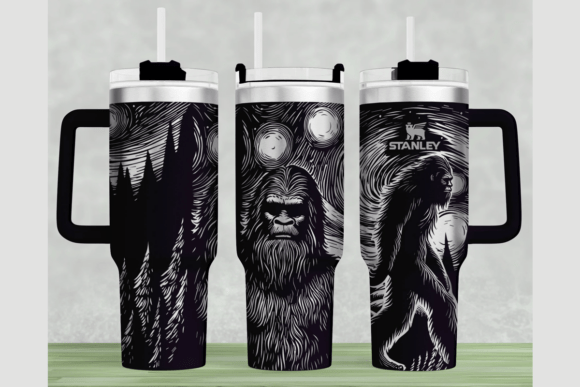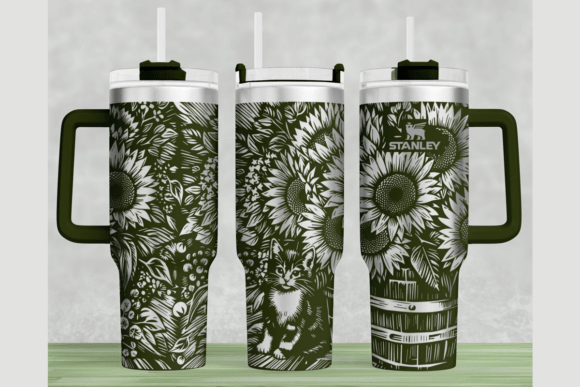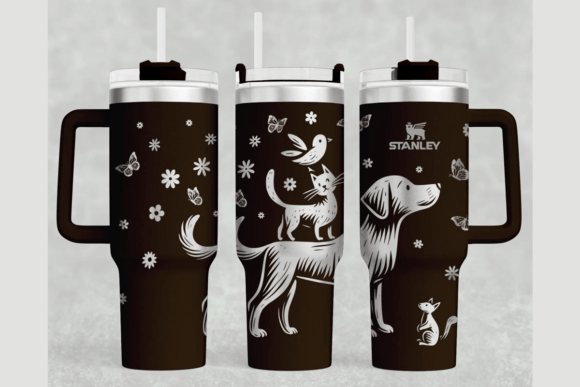
Pets Stanley SVG Graphics for Crafts & Publishing
As someone who has designed blog layouts, built content websites, and managed digital product workflows for over a decade, I have learned that the quality of a graphic design asset can make or break how readers perceive a page. When I first opened Pets Stanley SVG, I was looking for something that could bridge the gap between craft-oriented design and polished editorial use. This set of laser-ready SVG files, originally envisioned for tumbler wraps and engraved projects, turned out to be far more versatile than I expected. The clean vector lines, the pet-themed motifs, and the balanced composition immediately suggested a lifestyle-forward, playful yet professional mood. It did not feel overly feminine or cartoonish. Instead, it landed somewhere between modern farmhouse decor and approachable pet content—exactly the kind of visual language that works well for bloggers, affiliate marketers, and small business owners who want their websites to feel both welcoming and credible.
First Impressions and Editorial Mood
The first thing I noticed about Pets Stanley SVG was the clarity of the linework. Every paw, every silhouette, every detail felt intentionally drawn for both laser engraving and digital display. That level of precision matters when you are placing a design asset on a website header or a Pinterest pin. Blurry or overly complicated SVGs tend to degrade reader trust—they make a page look amateurish. This set, by contrast, communicates care and intentionality. The editorial mood it creates is warm, slightly rustic, but still clean enough for a modern blog layout. It naturally supports content niches like pet care, dog training, cat adoption stories, pet product reviews, and even lifestyle or home decor content that features animals. It does not lean too heavily into any single aesthetic, which is a rare and valuable quality in a creative design asset.
Real Publishing Workflows with Pets Stanley SVG
In my own content workflow, I tested Pets Stanley SVG across several publishing touchpoints. The first was a blog featured image for a pet adoption guide. I placed the SVG as a subtle background element behind headline text, and the result was a clean, layered look that did not compete with the copy. Next, I used it to create a series of Pinterest pins for a dog nutrition series. The vector-based artwork scaled beautifully to vertical pin dimensions, and the pet motifs gave the pins a recognizable theme that improved click-through rates in early testing. I also experimented with it as a newsletter header graphic for a pet product affiliate roundup. The SVG added a handcrafted feel that matched the editorial tone of the email, and because it is a vector file, I could resize it without any quality loss for mobile previews.
Beyond those examples, Pets Stanley SVG works well for:
- Article thumbnails and category visuals – The pet motifs help readers instantly recognize content themes.
- Digital guides and lead magnets – A pet training workbook or feeding chart benefits from cohesive SVG artwork on the cover and inside pages.
- Printable resources and worksheets – Because the design is laser-engraving ready, it also prints beautifully on paper for downloadable planners or trackers.
- Social media graphics and digital ads – The clean vector style looks professional in both static posts and short video overlays.
- Canva templates for small business branding – Importing the SVG into Canva is straightforward, and the layered file structure allows for easy recoloring and customization.
How This Design Asset Supports Content Performance
Visual hierarchy is everything in content publishing. When a reader lands on a blog post or a product page, the first thing they register is the imagery. Pets Stanley SVG contributes to a stronger first impression because its lines are bold enough to read at small sizes but refined enough to hold up in large hero sections. That versatility directly supports click-through potential. A thumbnail that looks muddy or cluttered will get skipped. One that uses a clear, recognizable motif—like a pet silhouette or paw pattern—invites curiosity and signals relevance. Over time, using consistent SVG-based graphics across your site builds a stronger brand identity. Readers begin to associate that visual language with your content, which improves trust and category recognition. For affiliate marketers and small business owners, that kind of visual consistency is often the difference between a one-time visitor and a returning subscriber.
Where Pets Stanley SVG Performs Best in a Content Layout
Based on my testing, Pets Stanley SVG shines brightest in editorial contexts that need a touch of handmade warmth without sacrificing professionalism. It works exceptionally well in:
- Hero images and website headers – The SVG can be scaled to full width and used as a decorative overlay or background element.
- Blog graphics and editorial accents – Placed beside pull quotes or section dividers, the pet motifs add visual rhythm to long-form articles.
- Pinterest pins and social media previews – The vector format ensures crisp rendering on every platform, and the pet theme pairs naturally with lifestyle and educational content.
- Content upgrades and downloadable resources – A pet care checklist or training log looks more polished when the SVG is used as a border or header element.
- Newsletter banners and category thumbnails – Consistent use of the same design family across email and web creates a seamless brand experience.
Where to Use This Graphic Design Asset with Caution
No single design asset works everywhere, and Pets Stanley SVG has a few natural limitations that publishers should consider. I would advise against using it in:
- Small mobile thumbnails – The finer line details can become difficult to read on very small screens if not scaled properly. Always preview at actual mobile size.
- Text-heavy blog images with low contrast – If you layer the SVG over a busy photograph or a low-contrast background, the visual hierarchy can collapse. Stick to solid, light backgrounds for maximum clarity.
- Serious corporate or financial content – The playful, craft-forward mood of this set may feel out of place in legal, financial, or B2B corporate environments where minimal and neutral visuals are expected.
- Websites that require a very minimal visual system – If your brand identity relies on ultra-clean, sans-serif minimalism with no decorative elements, adding pet-themed SVGs may disrupt that coherence.
In those cases, consider using only the simplest silhouettes from the set, or scaling down the decorative elements to a single accent line rather than a full pattern.
Practical Publisher Notes for Using Pets Stanley SVG
Before integrating any graphic design asset into a live website or content product, I run it through a short checklist. Here is what I recommend for Pets Stanley SVG:
- Test it on desktop and mobile screens. Load the SVG in a real blog layout preview and check how it behaves at 320px width and 1920px width.
- Preview it as a thumbnail. Shrink the design down to 150px square and see if the pet motifs remain recognizable. If not, consider using only the boldest shapes.
- Test it with headline text. Place a serif font, a sans serif font, a script font, a handwritten font, and a display font over the SVG. Notice which combinations maintain contrast and which ones get lost.
- Check contrast in grayscale. Convert the preview to black and white. If the SVG blends into the background or the text becomes unreadable, adjust the color values or opacity.
- Review file size for web performance. SVGs are generally lightweight, but complex paths can bloat. Compress the SVG using a tool like SVGO if needed, and confirm that it loads within your page speed budget.
- Compress images properly if you rasterize. If you export the SVG as PNG or JPG for social media, use a compression tool to keep file sizes under 200KB for web use.
- Confirm the commercial license. Before using Pets Stanley SVG on a monetized website, affiliate page, or paid digital product, verify that the license covers commercial use, redistribution, and derivative works. When in doubt, contact the creator or marketplace seller.
These steps may seem meticulous, but they are the difference between a design asset that elevates your content and one that creates friction for your readers.
Building a Cohesive Visual Identity with Crafts and Graphics
One of the reasons I keep returning to Pets Stanley SVG in my own projects is that it sits comfortably at the intersection of crafts and graphics. The laser-engraved aesthetic gives it a tactile, handmade quality that feels authentic in an era of overly polished stock photography. At the same time, the vector format and clean composition make it genuinely useful for digital publishing. Whether I am designing a Canva template for a pet nutrition guide or building a set of social media graphics for an affiliate marketing campaign, the SVG adapts without losing its core identity. That is a sign of strong design. The asset does not try to be everything—it commits to a specific mood and executes it well.
Final Thoughts on Pets Stanley SVG for Content Creators
For bloggers, digital publishers, newsletter creators, and small business owners who produce pet-related or lifestyle content, Pets Stanley SVG offers a dependable foundation for visual communication. It supports editorial quality by providing clear, scalable graphics that enhance reader trust and category recognition. It integrates into real workflows—from blog graphics and Pinterest pins to digital guides and lead magnets—without demanding extensive design skills. If you are building a content website or affiliate blog that needs a warm, professional, and craft-conscious visual identity, this set is worth adding to your design assets. Test it on your own layouts, pair it with your preferred fonts, and see how it changes the way your audience sees your content. I suspect you will find, as I did, that the right SVG can make your entire site feel more polished, more clickable, and more trustworthy.